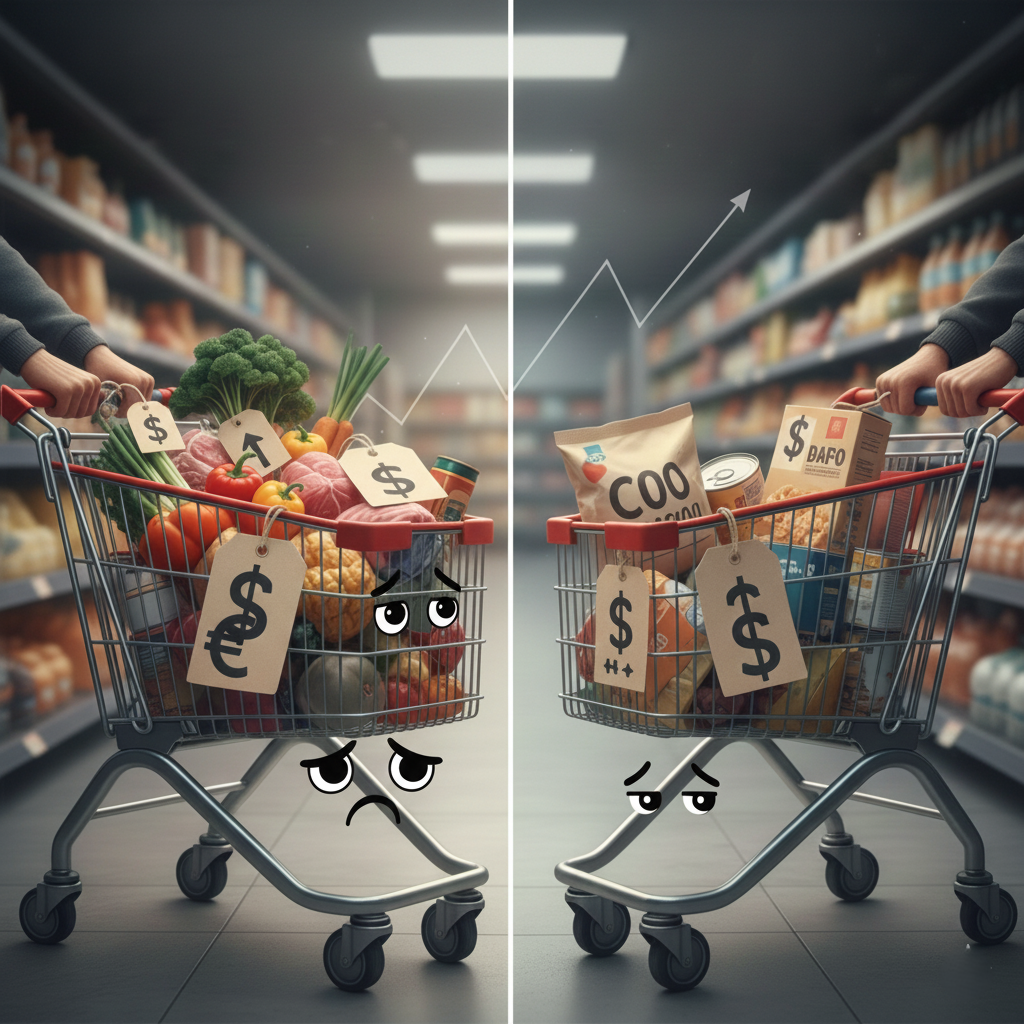

The cost of a half-empty shopping cart, that still costs more than your monthly budget is a true depiction of ‘The Grocery Grief’. The rise in food prices is creating a stark choice for the households everywhere: Nutrition or Affordability? This food inflation cycle is forcing consumers into shrinking choices-prioritizing cheaper, pre-made and highly processed alternatives over expensive but micro-nutrient dense foods.
WHY ARE PRICES RISING?
Rising food inflation stems from various socio-economic origins, with the following key factors playing a central role:
Economic Drivers:
The problem of food inflation is rooted in the system. Economic parameters drive the change, noting food prices rise faster than all items according to Consumer Price Index.
Global Supply Chain Disruptions: Major world-wide conflicts like the Russia-Ukraine war and post-COVID 19 pandemic recovery, has raised the global agricultural cost.
Input Costs: Natural Gas accounts for 70%-80% of the production costs for nitrogen-based fertilizers (ammonia and urea). Energy shocks like 2022 natural gas price spikes in Europe and Asia, raised global fertilizer costs.
Currency Devaluation: Currency devaluation makes it difficult to buy imported food and farm supplies. This cuts down the buying power of families.
Environmental Factors:
Climate-Agriculture nexus is becoming a contributing factor in food inflation due to environmental vulnerabilities.
Extreme Weather: The crop yields are influenced by extreme weather events-droughts, floods and heatwaves. This triggers panic among consumers and contributes to price hike.
Examples: Hike in global coffee price as reported by FAO during 2023/24 among other factors also included the prolonged dry weather in Vietnam, caused a drop in the coffee production and exports were decreased by 10%; Exports in Indonesia were dropped by 23% due to excessive rains; in Brazil, hot weather also impacted the coffee production to a 1.6% decline.
Land Use & Biofuel Demand: There is a growing demand to use farmlands either for growing food or to fulfill energy needs. The urge by government for Biodiesel in Indonesia and Brazil have made the edible oils (Palm Oil & Soyabean Oil) expensive.
THE SOCIAL COST
These disparities have compromised the dietary quality of the households. Below are the consequences.
Short-Term Effects:
Families resort to immediate survival strategies i.e. prioritizing calorie intake and financial ease over healthy food. Many are replacing fresh fruits, vegetables, high quality protein, and animal source foods cheap and ultra-processed alternatives such as rice, pasta etc. Expensive foods have also forced the families to limit their portion sizes or skipping meals.
A study in Pakistan noted that many families have reduced their intake of the major food groups namely, Dairy Intake by 45%, meat Consumption by 42% and Fruit intake by 48.1%.
Financial strain linked to the rising food prices is also a significant stress for the parents or caregivers. As financial instability contributes to anxiety, stress and depression.

The Long-Term Effects:
Both the macro and micronutrients are compromised. This is especially difficult for children as it affects their growth, hindering the Global Malnutrition Goals.
Moreover, processed foods (high in sodium, sugar and unhealthy fats) are the major risk factors towards Non-Communicable Diseases-Obesity, Type 2 Diabetes, and Cardiovascular issues (WHO, 2024).
Resultantly, poor maternal nutrition and the compromised childhood diets have long lasting effects that are passed down with high risk of the decline in cognitive and physical development over generations.
THE AFFECTED POPULATIONS
Food Price inflation is unfair; it hits the most vulnerable households the greatest.
Low-Income Households: They are more sensitive to the food price shocks as they spend major portion of their income on food. Families in USA allocated 32.6% of their income in comparison to 8.1% by the high-income households.
Fixed-Income Individuals and Seniors: This group has a high level of dependency on the fixed social benefits or stagnant pensions. Hence, they struggle the most to sustain and fulfill their dietary needs.
Female-Headed Households: A study by FAO (2025) stated that women and girls are especially effected as they often resort to coping mechanism like reducing their own food intake to cater the needs of the household particularly children. This results in the long-term risk of maternal and generational malnutrition.
Country-Specific Examples:
Developed Nations: In UK, the current living crisis has forced the citizens to the food bank charities as of 2024. The Trussell Group distributed 3.1 million emergency food parcels, recorded an increase of 94% over the past five years.
Middle & Low-Income Nations: Food inflation is an immediate developmental and humanitarian crisis. According to World Bank, food prices surged up to 30% in May 2023 in the low-income countries, leading to a 3.5% rise in food insecurity.
In 2024, Pakistan recorded persistently high stunting rates (40% of children under 5) and wasting (17.7%).
SUSTAINABLE FOOD FUTURE
Environmental & Agricultural Solutions:
- To achieve maximum harvest and inflationary setbacks caused by the climate driven shocks, adopting the Climate-Smart Agriculture (CSA) technology is necessary.
- Tackling food loss and waste reduction is important for food sustainability. Post-Harvest Loss wastes 30% to 40% of the total harvest.
Societal and Health Solutions:
- Public health campaigns should educate the public about affordable and nutrient-dense alternatives like legumes and beans.
- Expanding the localized and community-based food networks can strengthen the neighborhood resilience and bridge the food access gap.
Economic Interventions:
- Governments need to provide direct financial aids and subsidies to effectively mitigate the food inflation impacts on the vulnerable population by keeping the food affordable.
- Investment in regional and local food products is important to limit the reliance on long-distance logistics and the changing international fuel price shocks.

CONCLUSION
Food inflation is a multi-dimensional problem. Relying solely on immediate adjustments rather than the concrete measures is insufficient to address the deep-rooted structural and developmental issues to achieve food sustainability particularly for the developing nations. The long-term reliance by the vulnerable families for survival on unhealthy products is a disaster affecting public health and nation building. True food security requires the collaborative efforts of policymakers, industry leaders and civil society to work on the root cause rather than the symptoms.