

Microchips drive our digital age, but control over them is dangerously concentrated. The global race for semiconductor supremacy risks deepening inequality between nations. This analysis explores how the chip bottleneck is shaping the 21st-century balance of power—and what can be done to make the digital future fairer.
The Silicon Heart of Modern Economies
Every modern device depends on semiconductors. A car may contain over 1,400 chips; a smartphone, dozens more. But their importance extends far beyond convenience. Semiconductors determine a nation’s capacity to innovate, secure data, automate industries, and maintain military competitiveness. The economies that design, manufacture, and control access to these chips effectively hold the keys to the digital age.
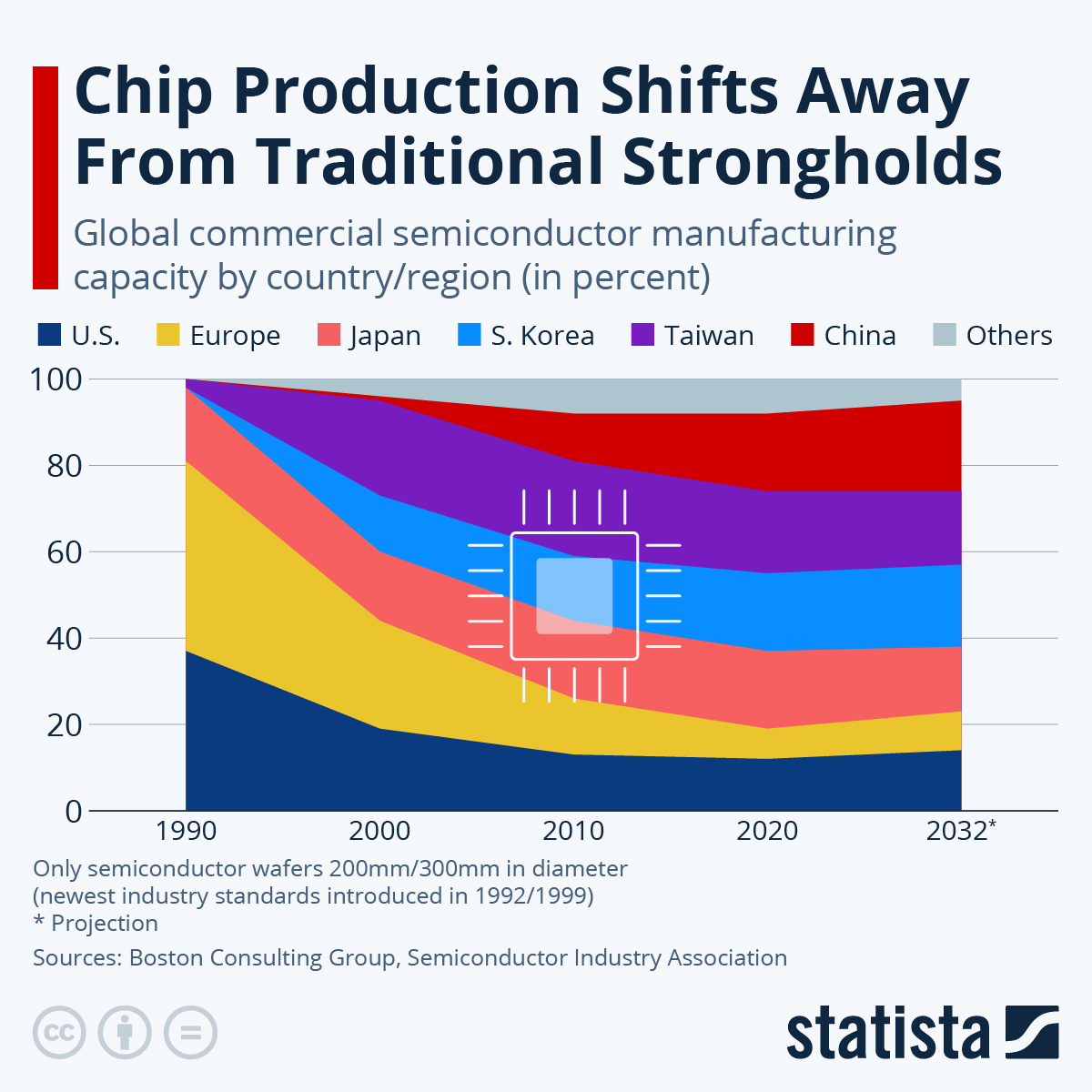
The problem? The microchip supply chain is extraordinarily concentrated. A handful of countries dominate its most critical stages. The United States leads in chip design and research, Taiwan’s TSMC and South Korea’s Samsung monopolize advanced manufacturing, and the Netherlands’ ASML holds the world’s only machines capable of producing cutting-edge lithography systems. Meanwhile, vast regions especially in Africa, Latin America, and much of South Asia—remain almost entirely dependent on imports.
This asymmetry gives rise to a new form of economic dependency. Where oil once defined geopolitics, semiconductors now shape it.
The Great Digital Divide 2.0
For decades, the “digital divide” referred to unequal access to the internet or digital tools. Today, that divide has deepened into a technological sovereignty gap. Nations without chip manufacturing or design capabilities risk exclusion from the next wave of digital transformation—AI, quantum computing, and smart infrastructure.
Take artificial intelligence, for example. Training large AI models demands powerful chips, GPUs and specialized processors. Countries unable to secure such hardware cannot realistically participate in developing frontier AI applications. This dependency ensures that wealth and innovation remain concentrated in a few tech superpowers, reinforcing a cycle where capital, data, and talent flow in one direction.
Developing economies find themselves in a bind. Without chips, they cannot digitize industries, automate agriculture, or modernize healthcare systems. Without digital modernization, they cannot grow the economic base necessary to invest in chip-related infrastructure. The result is a persistent technological trap.
Chip Geopolitics: From Collaboration to Containment
In the 1990s and early 2000s, semiconductor production was a global collaboration. The U.S. led design; Asia handled manufacturing; Europe contributed specialized tools. The ecosystem was complex but cooperative. However, escalating tensions between the U.S. and China have shattered that balance.
Export bans, sanctions, and exclusive “chip alliances” are redrawing the technological map. Washington’s CHIPS and Science Act and the EU Chips Act aim to bring manufacturing back home, while China’s massive state-backed investment seeks to build a self-sufficient semiconductor ecosystem.
This weaponization of technology has global consequences. Nations are being pressured to “choose sides” in what amounts to a new digital Cold War. Supply chains are being realigned based on political loyalty rather than efficiency or inclusivity. For smaller economies, the message is clear: if you are not inside one of these strategic blocs, access to advanced chips, and the prosperity they enable will remain out of reach.
The Economic Fallout: Inequality by Design
The consequences are already visible. Chip shortages during the COVID-19 pandemic exposed how dependent entire economies are on a few manufacturing hubs. Auto industries halted production, electronics prices soared, and inflationary pressures rippled worldwide.
Yet the crisis also revealed something deeper: countries with domestic semiconductor capabilities rebounded faster, while those without faced prolonged recovery times. The bottleneck acted as an amplifier of inequality, rewarding the technologically advanced and punishing the rest.
This inequality extends beyond economics. It affects education, healthcare, and even governance. Nations lacking access to chips fall behind in deploying smart grids, precision farming, telemedicine, and digital governance systems. Their citizens are excluded from the benefits of automation, efficiency, and innovation. In essence, the microchip bottleneck translates into a human development bottleneck.
Environmental and Ethical Undercurrents
Adding to this imbalance are the environmental costs of chip manufacturing. Producing semiconductors requires immense water resources, rare earth minerals, and energy. These resources often extracted from the Global South but refined and utilized in the Global North. The irony is striking: developing nations bear the environmental burdens of extraction but reap few of the economic rewards.
Moreover, the push for “onshoring” chip production in wealthier countries risks externalizing more pollution and carbon emissions to poorer regions, as supply chains are restructured to maintain low costs. Without equitable global governance mechanisms, the semiconductor race risks reproducing the same extractive patterns that characterized the fossil fuel and industrial eras.
Toward a Fairer Digital Future
The growing chip divide is not inevitable, it is a policy choice. The world has the capacity to ensure that access to digital technologies becomes a tool for shared prosperity rather than geopolitical exclusion. Achieving that vision, however, requires rethinking global cooperation around technology.
Democratizing Chip Knowledge and Training
Developing economies need support in building local capacity through education, research collaborations, and open-access semiconductor design platforms. Initiatives like India’s “Semicon Mission” and Africa’s nascent chip design hubs represent hopeful beginnings. Global institutions, from the World Bank to UNESCO, should treat digital infrastructure as a development priority on par with energy or transportation.
Building Inclusive Supply Chains
The semiconductor supply chain should be diversified geographically, not just politically. Encouraging manufacturing partnerships in Southeast Asia, Latin America, and Africa can reduce dependency on single points of failure while spreading economic benefits. International frameworks can incentivize such diversification through technology transfer and sustainable investment.
Regulating Tech Nationalism
Major powers must recognize that over-securitization of technology endangers global stability. While national security concerns are valid, blanket export bans and exclusive tech alliances stifle innovation and push the world toward fragmentation. Transparent multilateral agreements perhaps under the G20 or WTO could set fair rules for tech trade and intellectual property.
Linking Chips to Climate and Justice Agendas
The semiconductor race intersects with sustainability. Future chip policies should integrate green manufacturing standards and fair sourcing of minerals. Linking semiconductor governance with global climate finance mechanisms can ensure that technological growth aligns with environmental responsibility.
Conclusion: The Choice Before Us
The struggle over semiconductors is not merely about transistors or trade—it is about the architecture of global power in the digital age. If the world continues down the path of exclusion and competition, the microchip bottleneck will harden into a new form of digital inequality, as consequential as the colonial resource divides of the past.
But there is still an opportunity to choose differently—to treat technology as a shared heritage rather than a strategic weapon. True digital supremacy should not mean dominance by a few, but empowerment for all. The race for innovation will define this century; whether it unites or divides us will define the next.