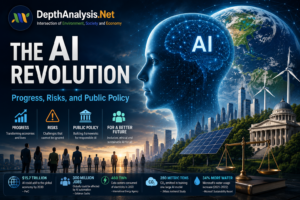

Artificial Intelligence, which started off as a niche area within computer science, has quickly become one of the most revolutionary inventions of the 21st century. This is because its applications range from recommendation engines and virtual assistants to autonomous machines and language models. Welcome to the dawn of the Artificial Intelligence Revolution.
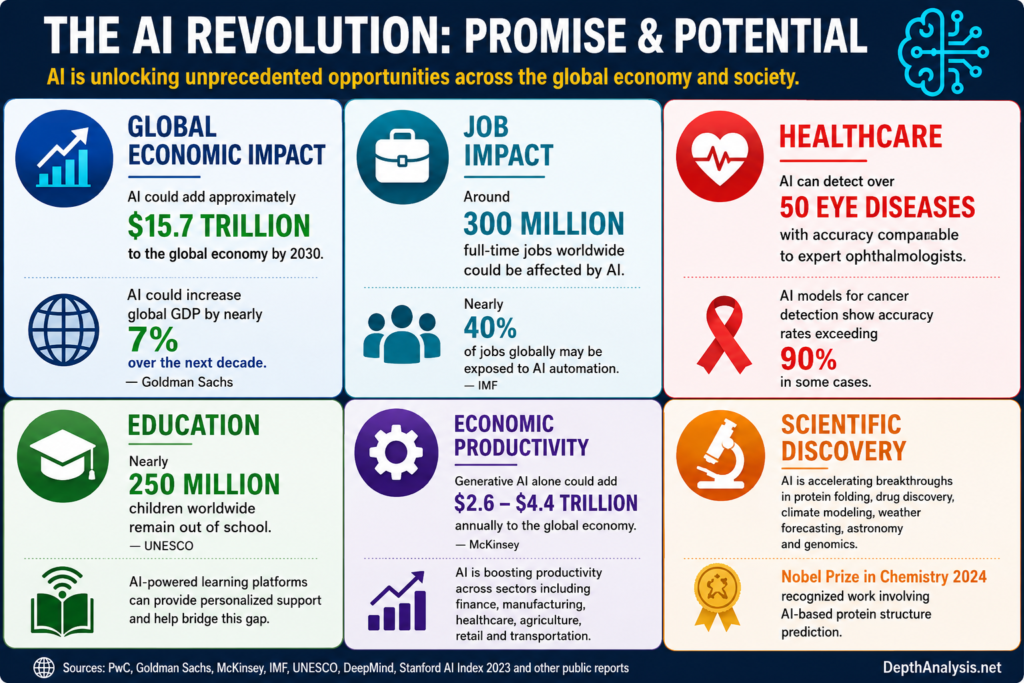
PwC estimates that the contribution of AI will amount to about $15.7 trillion for the global economy by 2030, marking a milestone in terms of business opportunities for AI in history (PwC). The impact of AI on the global GDP is estimated to be nearly 7% in the coming years, while influencing about 300 million full-time jobs globally through automation and augmentation.
However, in addition to all these opportunities lie worries about job prospects, privacy, misinformation, inequity, and environmental impacts of AI. What policymakers are faced with is not whether AI will progress, but rather how to ensure its progress for human advantage while mitigating its risks through appropriate public policies.
The Promise of AI
Transforming Healthcare
Artificial Intelligence Revolution has brought about major progress in the field of healthcare, helping doctors diagnose diseases and develop drugs.
Scientists at DeepMind have shown that artificial intelligence can recognize more than 50 eye diseases, with the same accuracy as professional ophthalmologists. Artificial intelligence is being applied in cancer diagnostics, with some tests having proven more than 90 percent accuracy in detecting specific types of breast cancer.
AI can help speed up the process of developing new drugs. Usually, the process of developing a drug takes between 10 to 15 years and involves a lot of money. AI-assisted drug discovery can significantly shorten this process by rapidly analyzing millions of molecular combinations.
Revolutionizing Education
AI-based learning platforms ensure customized education for each child according to his abilities. There are adaptive tutoring systems that can detect knowledge gaps and give instant feedback on performance.
According to UNESCO, about 250 million children are still out of school in the world, and many nations lack teachers. AI-based education technology can solve the problem, especially in developing nations.
Enhancing Economic Productivity
Firms are utilizing AI to automate processes, streamline logistics, better customer engagement, and aid decision-making.
According to McKinsey, Generative AI on its own can add economic value worth somewhere between $2.6 trillion to $4.4 trillion each year globally.
Productivity gains are expected across industries:
- Banking and finance
- Manufacturing
- Healthcare
- Retail
- Agriculture
- Transportation
These improvements could help mitigate labor shortages and stimulate economic growth.
Advancing Scientific Research
Artificial Intelligence has now emerged as a crucial factor in scientific discovery. The Nobel Prize in Chemistry awarded in the year 2024 for research on protein structure prediction through artificial intelligence has shown the power of AI in solving biological problems that previously required decades of research.
AI is also helping scientists:
- Model climate systems.
- Discover new materials.
- Analyze astronomical data.
- Improve weather forecasting.
- Accelerate genomic research.
The Risks and Challenges
Employment Disruption
Technological revolutions have historically resulted in the displacement of certain types of work and the emergence of new work. AI is different from previous technology in that it can automate not just physical but also cognitive processes.
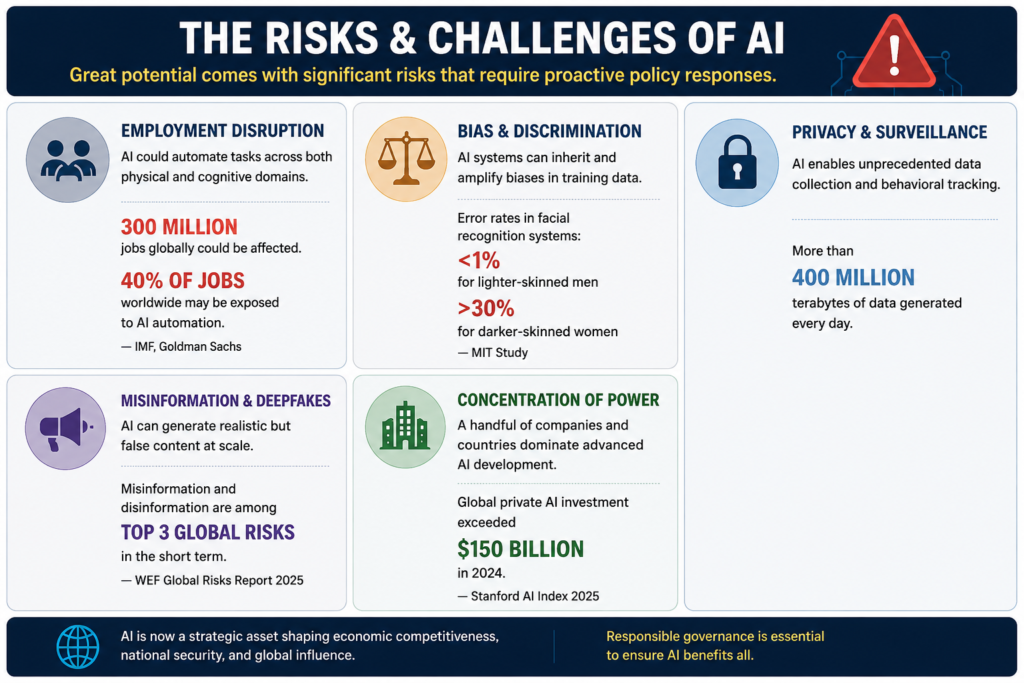
According to Goldman Sachs, approximately 300 million jobs globally could potentially effected due to rapid advancement in AI based services. According to the IMF, roughly 40 percent of all jobs across the world are at risk of being taken over by AI. Traditionally safe white-collar professions such as law, accounting, call centers, journalism, and computer programming are also vulnerable to AI.
AI could increase income disparity among and within countries unless there is an effort to retrain people.
Bias and Discrimination
The AI systems come with the same biases that can be found in the training data.
Many studies reveal racial and gender biases in facial recognition tools and employment software. MIT research revealed that while facial recognition algorithms produced error rates under 1% in lighter-skinned males, error rates exceeded 30% in darker-skinned females.
Making sure algorithms are transparent, explainable, and unbiased is among the most difficult regulatory tasks.
Privacy and Surveillance
Data acts as the main source of power for AI systems.
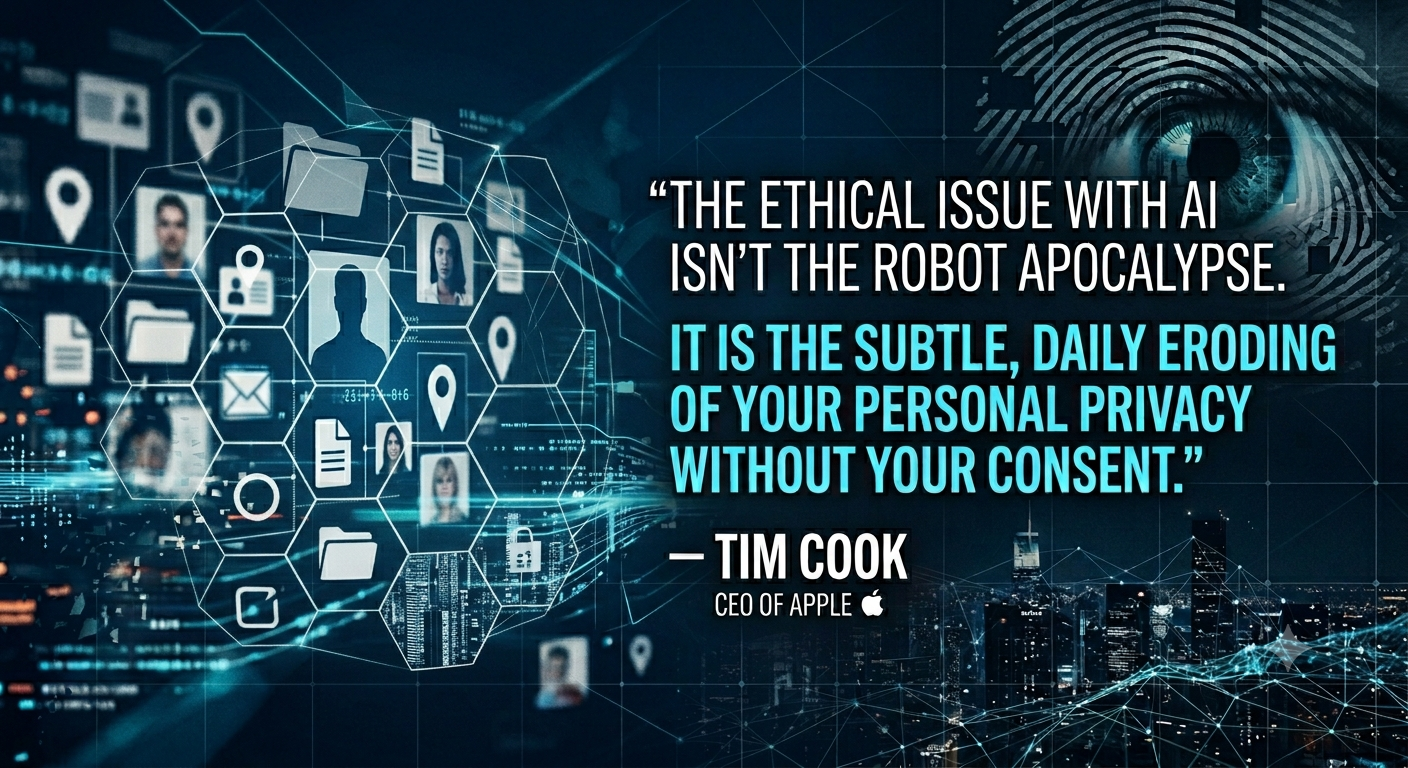
As per reports, more than 400 million terabytes of data are being produced on a daily basis by humanity (IDC). The government and corporations have gained new capabilities when it comes to monitoring people. The major concern worldwide shared is that the usage of AI technology like facial recognition and predictive analysis poses a threat to privacy rights and freedom of speech.
Misinformation and Deepfakes
Generative AI can generate convincing texts, images, audio files, and videos.
The World Economic Forum named misinformation and disinformation as one of the short-term risks at a global level in its Global Risks Report 2025. Deepfake technology can distort speeches, manufacture fake events, and sow distrust in media and institutions. The use of AI-driven disinformation is a major risk during election seasons and global crises.
Concentration of Power
The training of such modern artificial intelligence systems involves massive computing capabilities and investment that amounts to billions of dollars. Therefore, there is dominance in advanced artificial intelligence by a handful of companies, including OpenAI, Google, Microsoft, Meta, Amazon, and Anthropic.Moreover, there are handful of countries such as USA, Taiwan, S. Korea, China who have the technologies to manufacture advance chips which are the backbone of the AI revolution. The concentration of manufacturing of these specialize chips results in geopolitical conflicts (depthanalysis.net)
This concentration raises concerns regarding:
- Market competition.
- Economic inequality.
- Digital dependence.
- National security.
- Technological sovereignty.
While Artificial Intelligence promises efficiency and innovation, its environmental footprint is often overlooked.
Energy Consumption
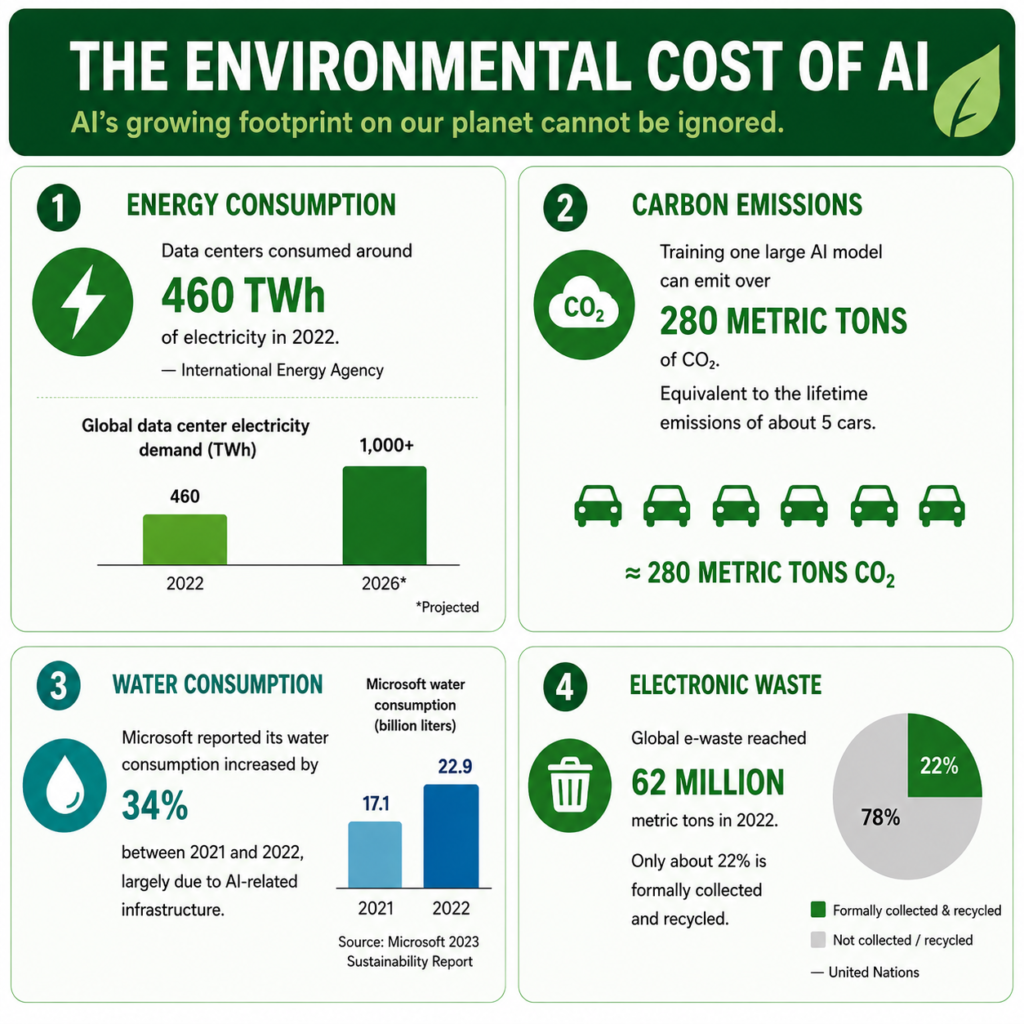
Recently, it is reported that worldwide data centers consumed roughly 415 TWh, which is nearly equal to the total electricity consumption of France. Although its proportion is still small compared to other components used in data centers, the proportion of AI usage has been estimated recently to be around 5% to 15% of the total energy usage by data centers, and this is rapidly increasing. (Hanwha Data Centers)
As per IEA’s estimates, the overall electricity consumption of data centers would exceed 945 TWh by 2030. The proportion of AI within this would rise to anywhere between 35% to 50%.
A single large AI model may require thousands of GPUs operating continuously for weeks or months during training.
Carbon Emissions
The researchers at the University of Massachusetts Amherst calculated that just one single run of a large language model would emit more than 280 metric tons of CO₂, which is similar to the carbon footprint of several cars throughout their entire lifetime.
With growing AI applications, data center and semiconductor manufacturing emissions can only increase unless renewable power supplies are used.
Water Consumption
AI data centers also consume significant amounts of water for cooling.
The annual water consumption in the worldwide data center industry exceeds 560 billion liters, or 148 billion gallons, of water. In response to large AI computing needs and the cloud infrastructure, water usage in this industry is expected to increase to 1,200 billion liters by 2030. One hundred megawatts of an AI super-scale data center may require 2.5 billion liters of water per year. (Al Jazeera)
Researchers estimate that a conversation with a large AI model may indirectly consume several hundred milliliters of water through cooling requirements, highlighting the hidden resource demands of digital technologies.
Electronic Waste
Rapid advances in AI hardware accelerate the replacement cycle for chips and servers.
Globally, electronic waste exceeded 62 million metric tons in 2022, according to the United Nations. Only about one-fifth is formally recycled. (UNitar)
Without sustainable practices, AI could intensify e-waste challenges and pressure critical mineral supplies.
Towards Green AI
Future AI development must prioritize:
- Energy-efficient algorithms.
- Renewable-powered data centers.
- Sustainable semiconductor manufacturing.
- Circular economy approaches to hardware recycling.
- Transparent environmental reporting.
Technological progress should not come at the expense of planetary sustainability.
The Geopolitical Dimension
AI has become a strategic asset comparable to nuclear technology and space exploration.
According to Stanford University’s AI Index Report 2025, private AI investment exceeded $150 billion globally in 2024, with the United States and China leading the race.
Competition now extends to:
- Semiconductor supply chains.
- Advanced computing infrastructure.
- Talent acquisition.
- Military applications.
- Cybersecurity.
For developing nations like Pakistan and Bangladesh, AI poses both possibilities and threats. Countries that embrace digitalization, learning, and innovation can leverage the AI economy, while those unable to cope with changes may increase their technological gap.
The Role of Public Policy
The future of Artificial Intelligence will depend as much on governance as on engineering.
Establish Regulatory Frameworks
Governments should develop risk-based frameworks emphasizing:
- Transparency.
- Accountability.
- Human oversight.
- Safety testing.
The European Union’s AI Act represents one of the first comprehensive attempts to regulate AI according to risk categories.
Invest in Human Capital
The World Economic Forum estimates that approximately 59% of workers will require reskilling by 2030.
Governments should prioritize:
- Digital literacy.
- STEM education.
- Lifelong learning.
- Vocational training.
- Workforce transition programs.
Protect Privacy and Civil Liberties
Robust data protection laws are essential for preserving public trust.
Citizens should retain control over how their personal data is collected and used, while surveillance technologies should operate within clearly defined legal frameworks.
Promote Competition and Innovation
Policies supporting startups, open research, and innovation ecosystems can prevent excessive concentration of power.
Public investment in AI research can ensure that benefits are distributed more broadly across society.
Encourage International Cooperation
AI challenges transcend national boundaries.
Global collaboration is essential to establish standards for:
- Safety.
- Ethics.
- Cybersecurity.
- Transparency.
- Environmental sustainability.
Just as climate change requires collective action, responsible AI governance demands international cooperation.
Conclusion
The rise of artificial intelligence constitutes one of the most important changes in human history. This transformation promises tremendous breakthroughs in medicine, learning, science, and economy. However, at the same time, this transformation raises serious concerns regarding employment, privacy, fake news, discrimination, and environmental protection.
It is no longer a question if AI will affect the future; rather, it is a question if humankind will be able to establish institutions that would provide such conditions under which this technological revolution would benefit all people.
Undoubtedly, artificial intelligence will become an essential part of the twenty-first century. However, its contribution to human progress will not only depend on how intelligent AI becomes, but also on how wise our public policy will be.