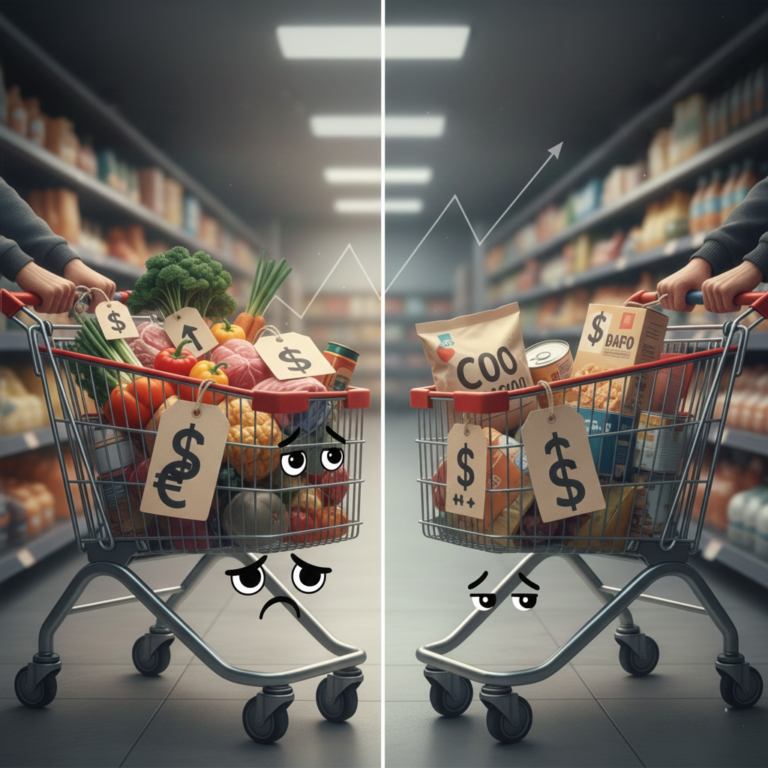
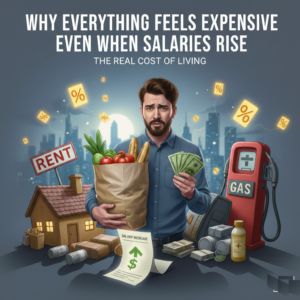

The alert pings. You look down and see the number unexpectedly. The number you’ve been wanting for what seems like forever is right there on your screen, and in an instant, the world has become a little bit lighter. The raise is now yours! You can breathe again, allow yourself to have a celebratory dinner, and the feeling of the safety net finally being created underfoot begins to set in. Then slowly but surely, the months start connecting, and the stark reality hits you: The safety net is still non-existent. You feel that everything is still expensive even when salaries rise.
No matter how much more you’re being paid, your bank account is as empty as it has ever been. Grocery shopping feels like running through a minefield with prices continuing to climb. Bills continue to arrive like a ton of bricks with no sign of stopping. You have risen through the ranks but still have your feet firmly planted on the ground.
So what is happening with all of the money? How can you be making more money than you have ever made and feel like you are going under? The answer is not just found in your bank account because it is due to the cumulative effect of economic invisible forces, psychological traps, and the silent erosion of “lifestyle creep.” which erodes one’s purchasing power over time without realizing it until it is too late.
The Illusion of Higher Income
An increase in salary doesn’t always mean you’re financially better off. Economists see it as nominal income (the number printed on your paycheck) and real income (what that paycheck can actually buy). For simplicity imagine your salary rises by 10%, but the cost of food, rent, and transport rises by 12%. On paper, you’re earning more. In reality, your purchasing power has shrunk. It’s like getting a bigger bucket to carry water only to discover it now has holes in it. Many people celebrate income increases without realizing that rising prices may already be eating away at the benefit.
Inflation: The Silent Wallet Shrinker
Look, we’ve reached that awkward stage of the evening where we have to talk about the “I-word.” No, not intentions—inflation.
It’s that dreaded economic term that basically means your money is currently on a crash diet while your grocery bill is clearly on bulk-season. At this point, we either need to understand inflation, or we need to start training our golden retrievers to hunt for truffles just to afford the rent. Prices do not show up in the headline statistics, they only show up in everyday life, such as supermarkets, gas stations, and your power bill.
Even a small amount of inflation can have a big effect on all the things you buy. Additionally, many people tend to overlook one of the biggest causes of inflation, which is hidden inflation. Some of the more common forms of hidden inflation include:
- A smaller product size for the same price
- Lower quality materials
- Hidden service fees or charges
It may take time before you become conscious of the reduced amount of goods your dollar buys. For this reason, inflation is commonly referred to as an invisible thief of wealth, because it takes effect slowly, almost without you even realizing it, until you begin to feel that your money is less and less every month.
Costs Rising Faster Than Paychecks
Certain essential expenses increase much more quickly than wages, which leaves many people feeling that wage increases are not enough.
| Category | The “Vampire” Effect | The “Why” Behind the High |
|---|---|---|
| 🏠 Housing | Rents > Raises. In most cities, your landlord is effectively “taxing” your promotion. | Urbanization and supply shortages. |
| 🛒 Food | The Shrinking Grocery Bag. You’re paying 2026 prices for 2022 portions. | Climate shocks, fuel spikes, and supply chain “hiccups.” |
| 🚗 Transport | The Commuter Tax. The cost of just getting to the job that gave you the raise is climbing. | Volatile fuel markets and rising parts/maintenance costs. |
| 🏥 Healthcare | The Invisible Outlier. Medical costs are sprinting while the rest of the economy is just jogging. | Costs rising significantly faster than the Consumer Price Index (CPI). |
| 🎓 Education | The Knowledge Debt. Tuition and upskilling costs are a “subscription” that never gets cheaper. | Yearly climbs in tuition and mandatory professional training. |
When costs in the largest portions of your budget grow rapidly, no matter the amount of your salary increase, it feels like it’s gone when you get your first paycheck.
There is a second reason why the money seems to fly away once we get a raise: our lifestyle gradually increases with our income, commonly referred to as lifestyle creep.
Lifestyle creep usually begins innocently; once I started earning more dollars, upgrading my phone, ordering food out more frequently, getting an additional streaming subscription and renting a slightly nicer apartment, there was nothing indulgent about any of those things. However, when combined, they do contribute to higher baseline expenses.
As the time passes, the newer lifestyle is the new normal. Therefore, once exciting extra income now feels as if it is needed for purposes of maintaining the new lifestyle.
Structural Economic Factors Most People Don’t See
Not all price increases come from personal choices. Many are driven by large-scale economic forces that operate behind the scenes.
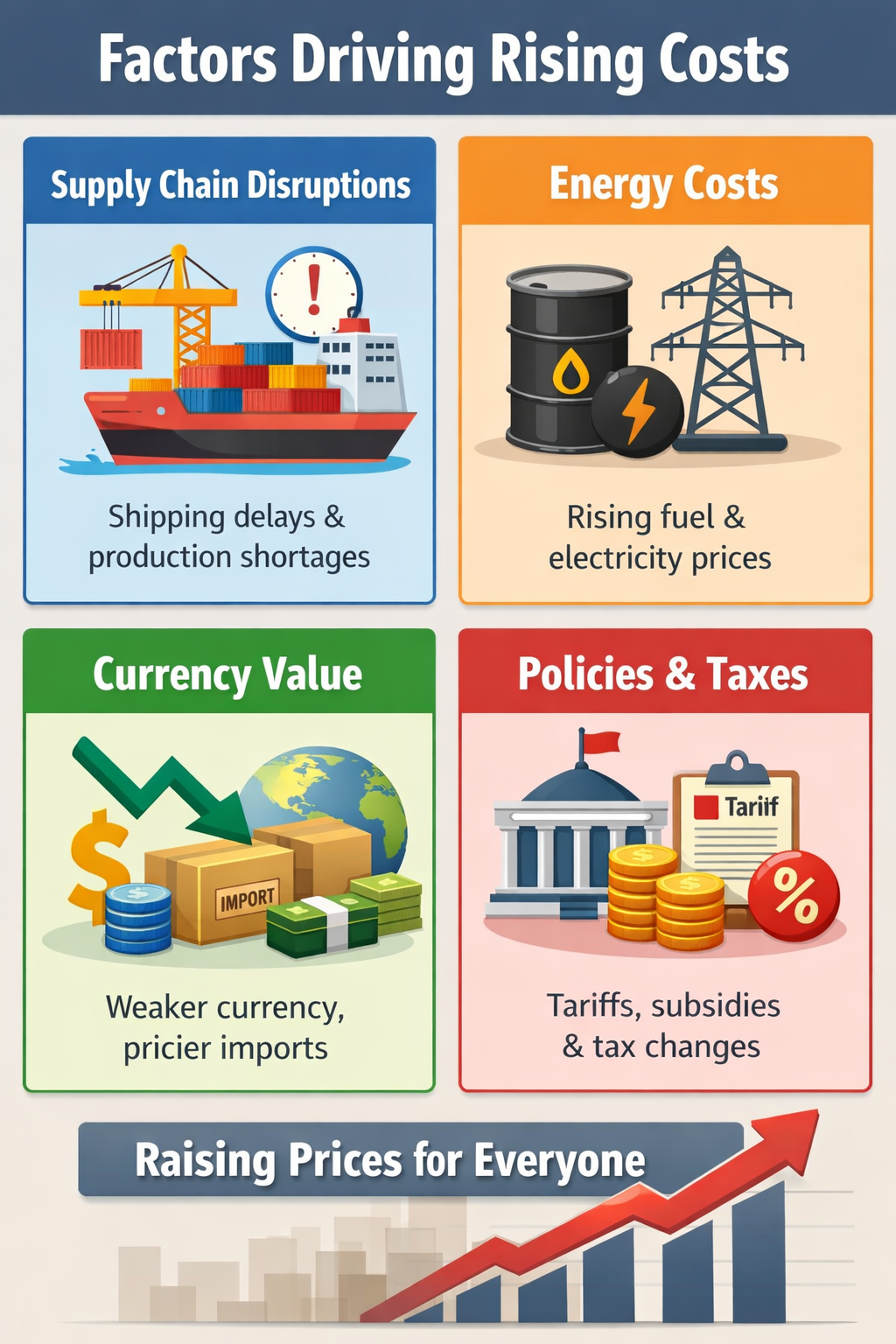
These factors are complex, but their effects are simple: they influence the prices you pay every day, regardless of your salary.
Psychological Reasons It Feels Worse Than It Is
Money isn’t just mathematical (2+2=4), it’s emotional. Our perception of expenses is shaped by how our brains process gains and losses.
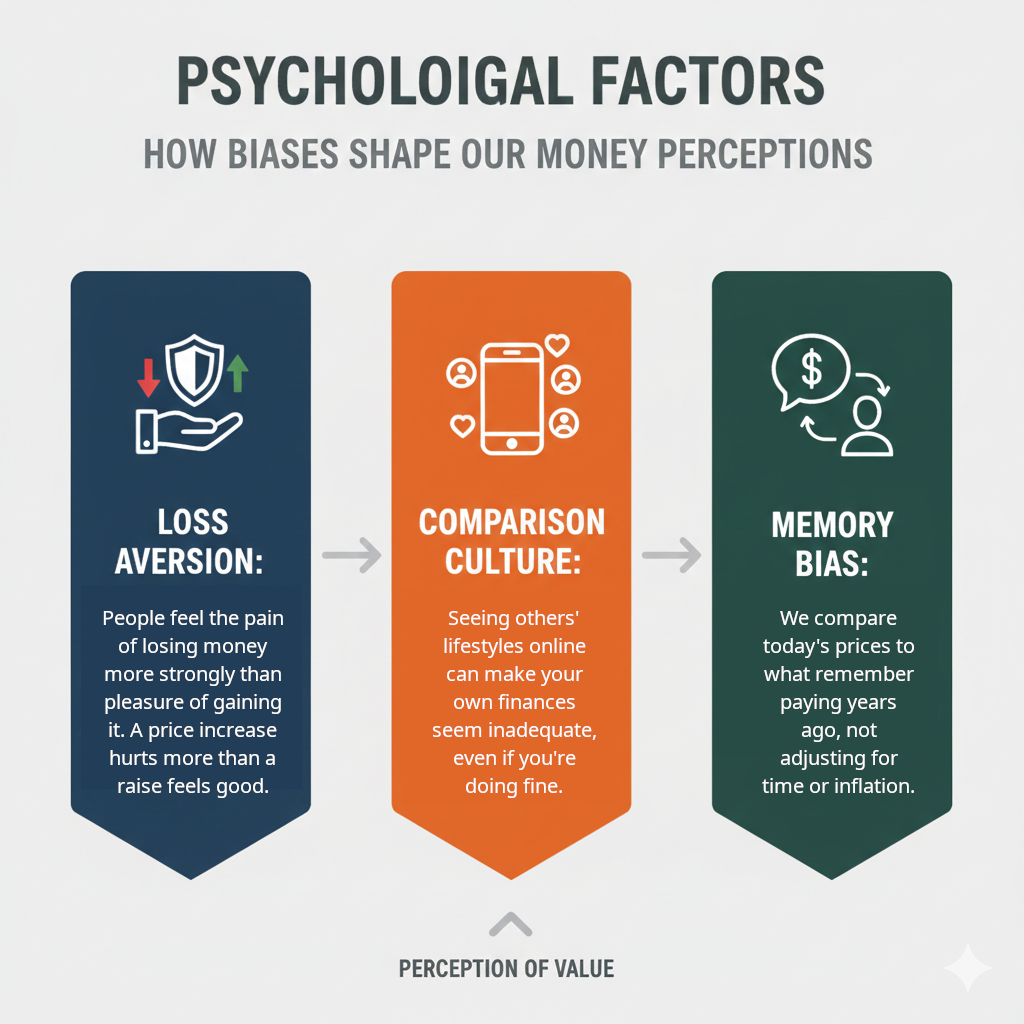
These psychological effects amplify the sensation that life is getting more expensive, even when income is technically rising.
What You Can Actually Do About It
While you can’t control inflation or global markets, you can control how you respond.
- Track spending to see where money truly goes
- Focus on reducing high-cost expenses first
- Build additional income sources if possible
- Save in ways that keep pace with inflation
Small, consistent adjustments often make a bigger difference than drastic changes.
Conclusion: It’s Not Just Income, It’s Purchasing Power
Feeling less wealthy even with an increase in actual cash income is not a failure on your part; it is simply indicative of current economic trends. This combination of rising prices; shifting costs; changing lifestyle habits; and an individual’s own psychology profoundly influence your financial situation. Each one of these factors has the ability to change an individual’s overall purchasing power.
Podcast: Why Everything Feels Expensive Even When Salaries Rise