
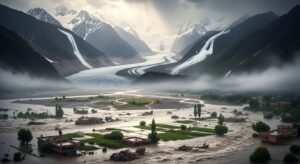

The water is rising, but the debt is deepening. A “Climate-induced humanitarian disaster of epic proportions,” a statement by Pakistan’s Ministry of Climate Change, symbolizes its vulnerability. Crucially, the nation’s greenhouse gas (GHG) emissions are only 0.9%. It is ranked 8th on the Global Climate Risk Index (UNDP). The highest emitters are USA and China. Climate Finance Pledges at COP29 are hope for the nation. This will bridge the Climate Finance Gap and secure financing for Pakistan, a way towards a climate resilient state.
THE GLACIER CRISIS AND CASCADING IMPACTS
Pakistan’s landscape is unique, surrounded by the majestic mountain ranges Himalaya, Karakoram, Hindukush. A rise of 5.3°C in the projected temperature of Pakistan is expected compared to the global average of 3.7°C.This is causing rapid melting of Hindukush-Himalayan (HKH) glaciers. Regions like Chitral have lost 31% of glacier till 2022. Melting glaciers raise water in the rivers and results in GLOFs (Glacial Lacks Outburst Floods). This prompt floods, in the Indus River Basin.
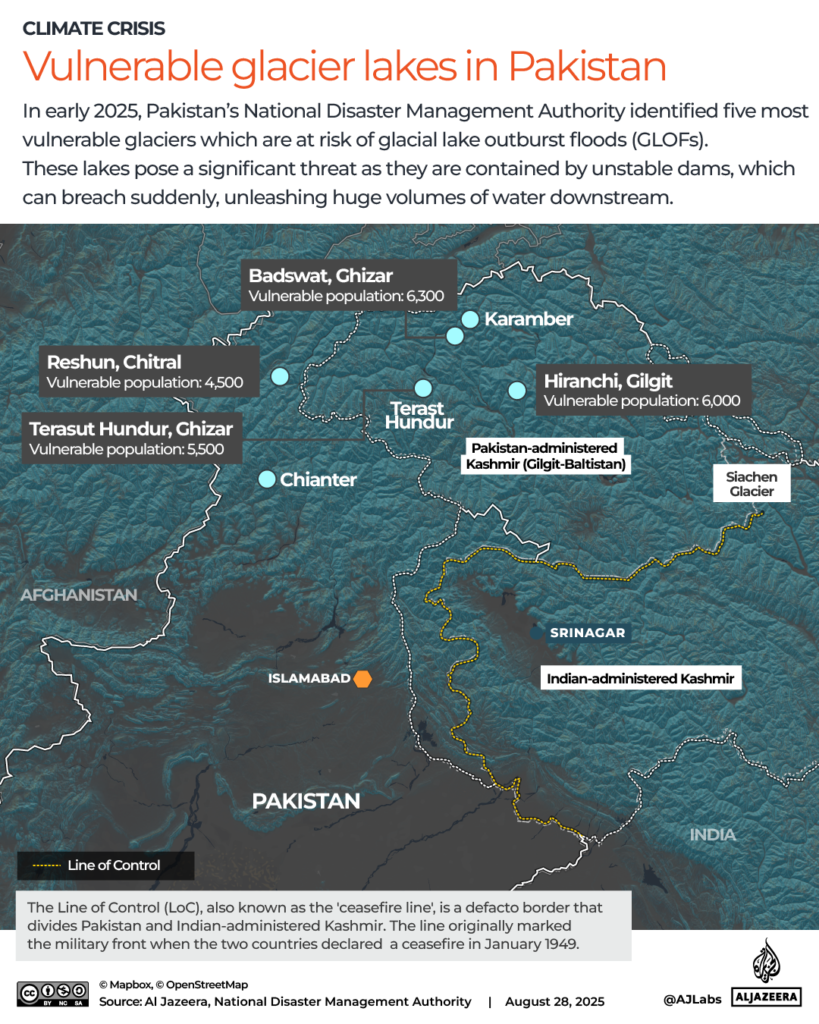
These consequences are due to internal problems and global governance prioritizing mitigation over adaptation. Since 1850, industrialized nations account for the 92% of excess CO₂ emissions.
Impacts and Vulnerability:
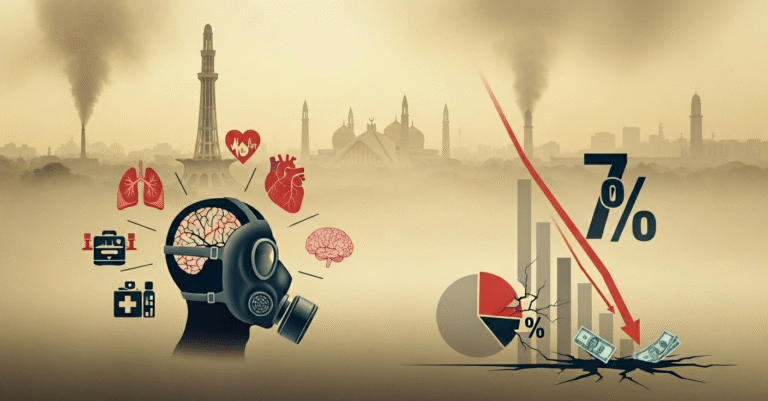
Agricultural Collapse and Socioeconomic Fragility: The verified floods of 2022 damaged more than 2.2 million hectares of the farmland, especially in Punjab and Sindh. 90% of crops (rice, cotton, maize, vegetables and orchards) were destroyed. The total economic loss from the 2022 floods was a devastating $30 billion. This loss and the resulting food insecurity exacerbate the fact that 60% of Pakistanis have limited capacity to adapt due to low monthly income (World Bank). About 22% of families after the 2022 floods took debt and resorted to child-labor to survive. The World Bank estimates that the climate crisis could reduce the GDP by 18-20% by 2050.
Floods, heatwaves and smog have amplified the risk of water-borne, respiratory, and skin diseases especially in rural areas. It places a huge burden on the national health care system, reducing the quality of life.
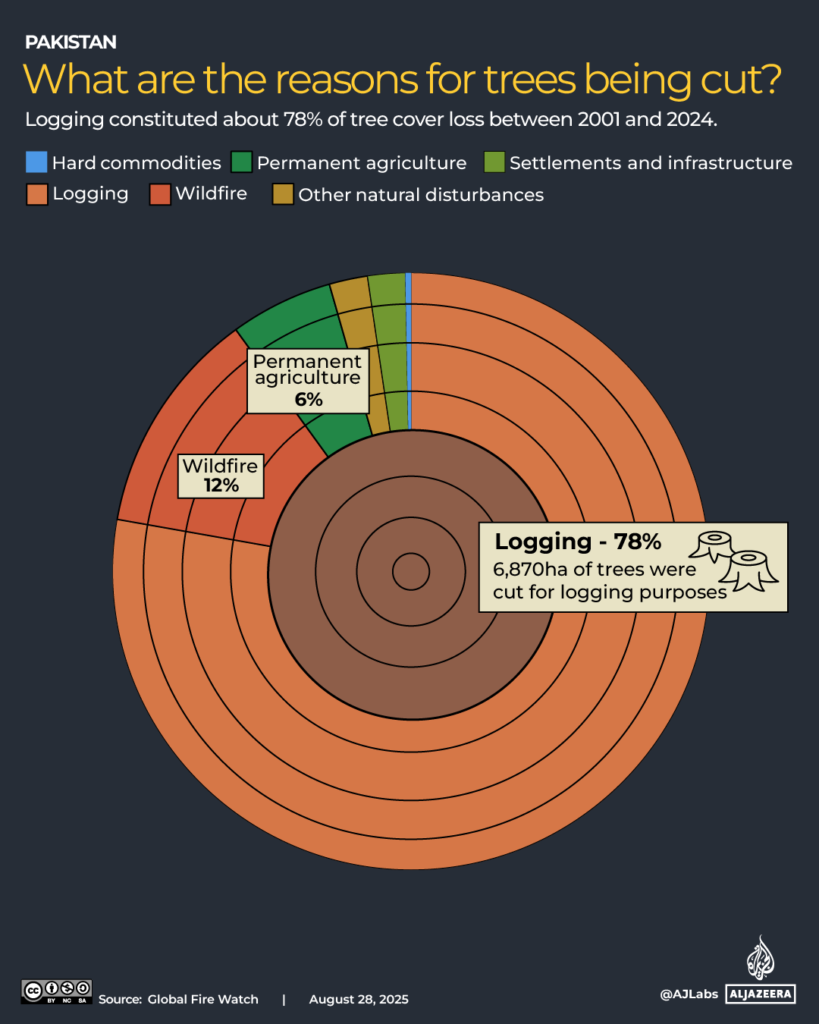
Environmental degradation results in drought, decreased river flow, dry spills, limited water for use leading to water scarcity. Deforestation has made the land prone to landslides and erosion.
CLIMATE FINANCE PLEDGES AND THE COP29 IMPERATIVE
Climate finance is an urgent necessity for Pakistan to plan mitigation policies, reduce the GHG emissions and undertake restoration efforts. Pakistan is an agrarian economy and have high dependency on natural resources. The country alone requires $ 348B by 2030 for decarbonization and resilience building which also includes $ 200B for the energy transition as specified in its Nationally Determined Contributions (NDCs) of 2021. Pakistan has vowed to reduce the projected emissions by 2030 up to 50% in parallel with its Nationally Determined Contributions (NDCs).
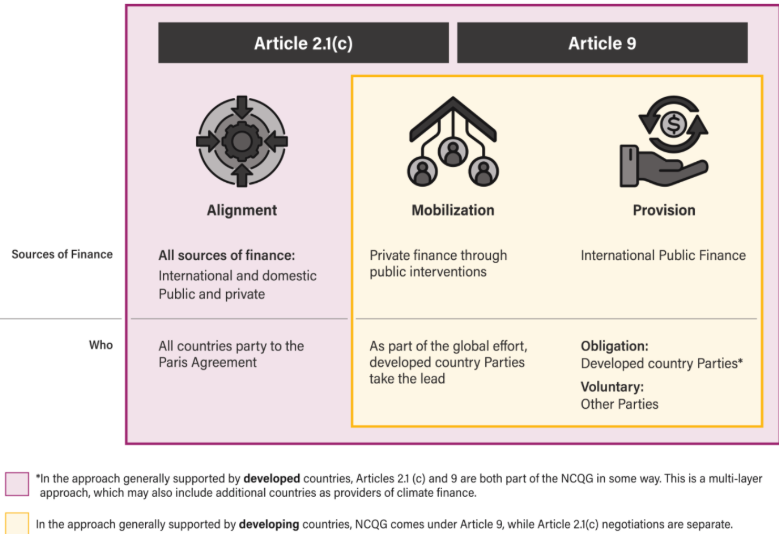
Pakistan has made important contributions to global climate diplomacy. In COP27 (2022), it served as chair during the initiation of the Loss and Damage Fund. The pledges of over $ 800M, considered as a political breakthrough during COP28 (2023) was also insufficient for developing states like Pakistan. But the recent 2024 Baku COP29 or ‘Finance COP’ is significant for Pakistan. G77 of which Pakistan is a part, negotiated the implementation of the Loss and Damage Fund and advocated for a stronger global financial commitment. Pakistan was at the forefront of negotiations to climate finance $1.3 tn. per year till 2035 from all sources and a core goal of $ 300B each year in the new financial pledge- the New Collective Quantified Goal (NCQG).
The NCQG was adopted at COP29, but the nations couldn’t come to a mutual consent on the future of the outcomes of the COP28 (Pledge to transition from the fossil fuels) and this matter is on hold till COP30 (Brazil). The states did agree on the rules for International Carbon Markets (Article 6).
For Pakistan uncertainty looms around the timely disbursement and discrimination. As the current inflow is mainly in the form of loans with limited grant funding, which results in a mounting debt burden. Thus, Pakistani delegate demanded the prioritization of grant-based funding, accessibility and equity for vulnerable nations. They also urged the developed nation to grant debt-free finance to ensure the transition to a sustainable economy without undermining justice and development.
Pakistan has designed the Resilient, Recovery, Rehabilitation, and Reconstruction Framework or 4RF (2022). It provides a detailed plan for the post-flood disasters restoration. Pakistan has vowed to reduce the emissions up to 50% by 2035 in parallel with its Nationally Determined Contributions (NDCs). National Action Plan 2023 also aims to implement adaptation measures, increase inclusion and create collaboration among the stakeholders involved.
Unfortunately, Climate governance in Pakistan lacks due priority by the home leadership and by the policies developed nations. The country is marred by regional instabilities, macroeconomic uncertainty and weak fiscal capacity. It is also dealing with high debt, internal budget constraints and limited institutional capacity to effectively mobilize the resources internally. All these factors have resulted in the Climate Finance Gap. Although, climate financing is crucial for this climate action journey. But the mobilization of $ 348B by 2030 has become a challenge for Pakistan.
Another debate around climate mitigation and adaptation is Climate Injustice which is at the heart of moral dilemmas. COP29 has reignited the Climate Justice debates demanding accountability from the major GHG emitters.
THE PATH FORWARD
From the Himalayan glaciers to the Indus Floods, Pakistan’s climate crisis is a warning. Delaying further will cost livelihoods, lives, and the future. Pakistan must continue to update its NDCs in with practical goals. A shift towards Renewable Energy Sources will build national resilience. Regional cooperation, community engagement, and transparency are crucial. It is an obligation and moral imperative on the developed nations rather than a diplomatic gesture to fulfill the climate finance pledges of COP 29. Upholding climate justice by providing grant-based, debt-free financing. It is the only way to stabilize a key developing economy and ensure global sustainability.



Very well crafted and thought provoking article. Keep it up
It is an excellent analysis. There is no doubt that climate justice is to be provided to Pakistan being one of the most affected countries.
Good information and portrait about Pakistan loss due to climate change is an alarming for future generations
Such a loss for Pakistan i hope Our government will take initiative to recover from these crises
Good effort
Very though provoking analysis. Pakistan is agricultural based economy and very vulnerable to natural disasters sauce as floods and heatwaves. As you said Pakistan is emitting less than 1 % of GHG but loss to economy in 2022 alone was more than 30 Billion dollars due calimatic changes that is very disproportionate.
Yes Pakistan needs actualised finance pledges from international community in COP 29.
It is an excellent analysis. There is no doubt that climate justice is to be provided to Pakistan being one of the most affected countries.
An excellent analysis and point to ponder. Having struck with super floods, earthquakes, hurricanes, hailstorm all form basis for completing promises for climate financing. The author has established the point well.
Great effort to make us understand the alarming situation that we Pakistani as well as the region may face in near future. Well done 👏
The article was overall very beautifully written, and it clearly described the mountains and how floods occur. I agree with the last paragraph that Pakistan should cooperate in reducing climate change, as this will help protect our country from major disasters and also save our vegetation and crops. Taking timely action can ensure a safer future for the next generations..
Good analysis, not only government agencies but we all, should take care of climatic effects deteriorating living conditions of the world.
Great article! The impact of melting glaciers on ecosystems and communities is alarming. Inspiring us all to take action.